Schooling is seen as a basic human right to receive an education. Traditionally, it is the place where students receive their primary knowledge. Formal instruction is given by teachers to students on a variety of subjects. As the world is progressing though, we have to ask if this is still the most beneficial way of learning.
How do Children Learn?
Everyone learns in different ways. Including children. Some learn better by hearing, some by reading, some by seeing and some by doing. Some prefer a quiet environment with a book while others learn through running outside using their bodies.
“Living is learning and when kids are living fully and energetically and happily they are learning a lot, even if we don’t always know what it is.” -John Holt
Mainstream schooling focuses on a vary narrow way of learning. Children are expected to learn through listening to a teacher while sitting quietly for long periods of time. Children are also expected to learn subjects for which they have no interest in and probably will never use again in their lives.
Many children “fall behind” because of the sheer volume of material that needs to be memorised and large classrooms which does not allow for individual attention. The current method of schooling caters for a small minority of learners.
Pro’s of Mainstream Schooling
Mainstream schooling is still the preferred way of education for the majority of people. Most adults today completed their schooling in a mainstream school and they are very familiar with it. Does that mean though that mainstream schooling is better?
Let’s have a look at the pro’s of Mainstream schooling
Structure
School starts and ends at the same time every day. And within the day, there is a structure built around lesson time, break time and how subjects are taught. This is beneficial to kids who thrive on strict routines.
Extended cultural and sport activities
Schools offer extra-curricular activities, usually at no extra charge to parents. It normally takes place on the school premises in the afternoons and is convenient for parent, student and teacher.
Safe place for children of working parents
In most families both parents have to work and school offers a place where children can go to during that time. At the same time they are receiving an education which relieves parents from this responsibility.
Teachers require education degrees
Especially in the higher grades, some subjects can be very technical. For these subjects you need someone with the necessary expertise to facilitate the teaching.
Socialising
With so many children together there is an opportunity for social interaction. Being surrounded by children of the same age, it should be easy to socialise. Although the forced socialising during specific times is also often seen as a disadvantage.



Con’s of Mainstream Schooling
Although there are advantages of mainstream schooling, the question needs to be asked. Does it outweigh the disadvantages?
Class sizes
The recommended teacher to student ratio in South Africa is 30:1. This ratio makes it impossible to focus on a child’s individual needs. As there is a time frame in which to teach the curriculum, a child who does not understand the subject matter, might be left behind.
Memorisation and Testing
A large emphasis is put on memorising subject material in order to pass a test. This however does not necessarily mean a student understands the work. Often students also only rely on short term memory for testing and forget what they learned shortly after the test.
Less parental involvement
Parents are not directly involved in their children’s education and often rely on everything to happen at school. With the pressure of modern day society, many parents don’t have time to have any involvement in their children’s education.
Competition based
Schooling tries to motivate children through competition. Although testing is not a good method to show understanding and learning, only those with good test results are rewarded. Children who don’t fare well in testing might become disheartened and lose interest.

Unnatural environment
Sitting for hours in a classroom, listening to a teacher, is something very few adults will be able to do. Yet we expect this of growing kids who learn better through moving their bodies. Learning through a text book in a classroom is very far removed from the practical world.
Socialising
Socialising in schools is often seen as unnatural. Children are forced to socialise with a specific group of kids within a certain time limit and space. This does not leave much space for natural play.
Bullying
Bullying seems to be more prevalent in mainstream schooling. And many parents remove their children from school due to this.
The Way Forward
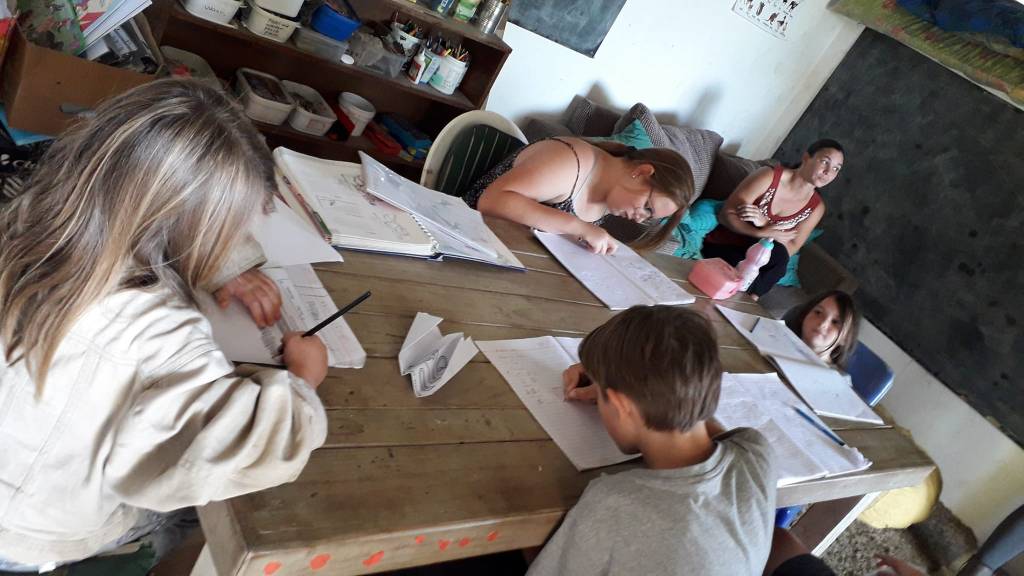
At Animalia, we believe in bringing the best of both worlds together. We have a semi-structured schedule with a child teacher ratio of 5:1. This allows for focusing on the individual child.
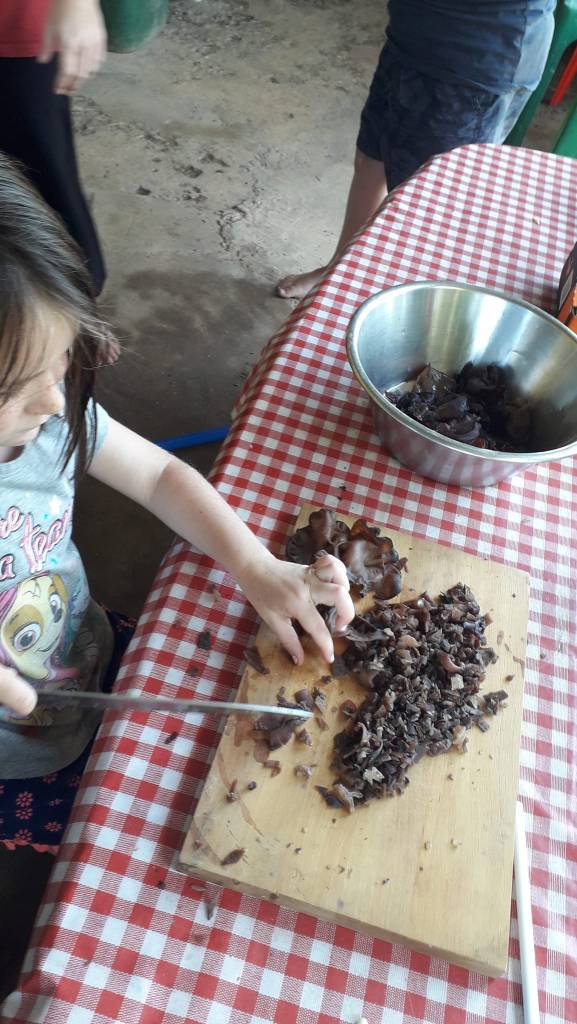
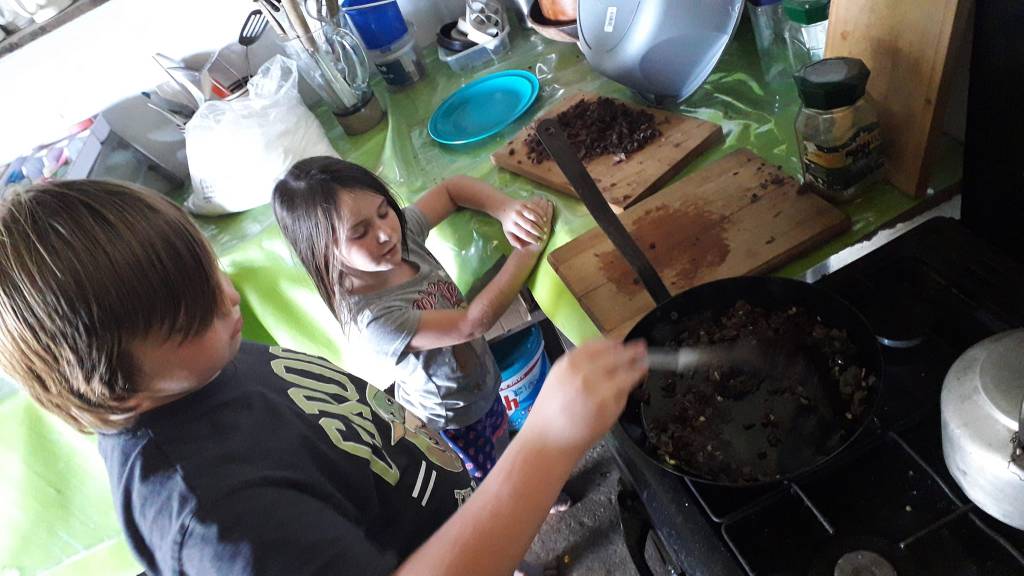
We also offer free learning through exploring and acknowledge that every child learns differently. Children are encouraged to explore subjects that are of interest to them. This naturally encourages individuals to learn more. We also encourage children to take responsibility for their own learning rather than waiting for a teacher to tell them what to do.
With plenty free play, socialisation across all ages happens naturally. Here children indeed learn through living, and not through a top-down structure.
 Animalia Learning Center